
"Putin still believes that he will reach Kyiv, overthrow the government, and seize Ukraine": an interview with an American expert
- Автор
-

- Дата публікації


According to the American expert, Putin still believes that he is winning.
Довіряйте надійному — підпишіться на Telegraf у Google Новинах
It’s no secret that one of the goals of the U.S. President Donald Trump’s foreign policy is to secure a deal to end the war in Ukraine. While the outlines and timeframes of this agreement remain a mystery, Kyiv insists on strong security guarantees that would have effect in the event of a deal.
What might Trump need to get Putin to the negotiation table, and what is the Russian dictator ultimately hoping for? Read below in the interview of "Telegraf" with Andrew Michta, the Senior Fellow at the Scowcroft Center for Strategy and Security under the Atlantic Council (Washington).

— Mr. Michta, it’s interesting to hear your forecast for 2025. What should Ukraine expect from Donald Trump’s second presidency? Will the U.S. finally have a strategy for Ukraine, and how will Trump act in his attempt to achieve his goal of ending the war?
— During the campaign, I suspected that Trump was going to make a deal and say, "Let's end the war." He said, "I'll end it in 24 hours," but that's all rhetoric. I don't know of any war that ended in 24 hours.
But the point is, and I think General Keith Kellogg (Trump's special envoy for Ukraine and Russia — ed.) mentioned this recently, the Russians are rejecting the deal. They have basically rejected the offer.
Putin believes that he's winning. He believes that he's going to win on the battlefield because Ukrainian defenses are relatively thin right now and your morale is sagging. Putin believes that he will have a breakthrough, drive to Kyiv, overthrow the government and put some stooge in there and in fact seize Ukraine. For a negotiation to take place, he has to understand that he cannot win at an acceptable cost. Acceptable cost is the key.
For now, the cost is acceptable to him. He recruits soldiers in the provinces. Buryatia, some backwater republics where getting a paycheck, a car, or other material goods drastically changes people's lives. He recruits foreign fighters — from North Korea, the Middle East, Africa, and so on.
The minute he has to announce a general mobilization and go to the big cities — Moscow, St. Petersburg — when all of a sudden it's no longer the minorities or the poor people who become cannon fodder, but the so-called Russian middle class, and the "babushki" see their sons being sent to the front — I think that's a very dangerous point for him. And he wants to avoid that.
In order to have Putin come to the negotiating table, in my view, the Trump administration will have to escalate the situation. But this is just my guess as an analyst. I don't know what the President or his advisors will do. Right now, there's no platform to negotiate anything but a de facto Ukrainian surrender, because if you take Putin's terms, he gets the territory, he locks you out of NATO and the EU, and you're done.
It's very similar to what happened to the Chechens after they were butchered. And worse, your young men will be drafted into the Russian security apparatus. You will be Russified. Your children would be sent to Russian-speaking schools. Putin wants to wipe out Ukrainian identity.
Many people in the West don't understand that in order to be an empire, Russia needs to have Ukraine. If Russia doesn't have Ukraine, it doesn't have a path toward empire again.
If you survive and rebuild your country and become a thriving democracy tied to the West, then Belarus will implode as well.
— Yes, the regime in Belarus cannot exist without Putin.
— I was in Minsk, I think, three times when I was still working in Germany. Young men and women were living under a semi-autonomous, nominally independent state, but national identity was beginning to emerge.
When I came back from my last visit to Minsk, I said to a colleague in Germany, "Look, this is going to be a long-term transition, but the Belarusian nation is emerging." When I saw the young people in Minsk being beaten to a pulp during the protests over the stolen elections, I thought, "The Ukrainians were there in 1991. This is not going to stop."
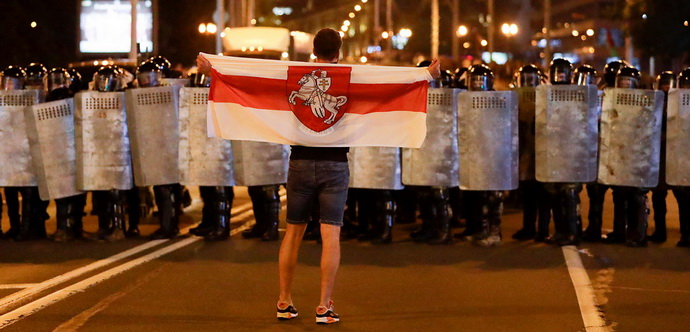
If you survive, there's no chance the Russians can hold Belarus. And if the region changes: Belarus becomes democratic, Ukraine is democratic, then the Russians themselves will have to figure out what to do. Because Russia is not a nation-state, it's an empire. And as long as it's an empire, it's going to be a chronic threat to the West.
This is another thing that people in Western capitals don't want to understand. In our national security documents, we have identified Russia as an "acute threat" and China as a "pacing threat."
I think both assessments are wrong. Whether Russia wins or loses in Ukraine, that's not going to change. Even if Putin is defeated in your country, he's going to go back, rebuild, and try again.
If you think about it, when Imperial Germany was defeated in 1918 and the Weimar Republic was created, the narrative was, "No, the great German army was never defeated, Germany was betrayed." The Germans called it the Dolchstoßlegende, the stab in the back.
The Weimar Republic was a total mess because there were no political institutions. And it gave them Hitler, who came in and said, "I will restore your greatness, you have been betrayed."
Well, fast forward to Russia in 1991, and the first decade [after the collapse of the USSR] was like a Russian Weimar. I've been to Russia. At first the Russians thought they were going to be more democratic than the French. But it turned out to be a total mess with wholesale theft of national resources because there was no rule of law or enforcement mechanism. Energy fields and entire production facilities were stolen. That mess, that decline in the living standards, that sense of humiliation gave them Putin.
And what is Putin telling them? "You were not defeated. We were betrayed by Gorbachev, because he was a coward, by Yeltsin, because he was a drunk, most of all by the West, and I will restore "velikiy Russkiy mir." The reason I bring this analogy because it's very disturbing to think of what's ahead of us, because it took a devastating war to break that German imperial drive.
Once Germany was defeated, occupied, divided, the Germans tried to figure out how to become a normal nation-state. I don't think this is in the card with Russia, but its defeat in Ukraine could have a very important impact on what's happening domestically. Because empires, and Russia in particular, whenever they're defeated in a foreign war, they fracture. The tensions come to the surface.
The Crimean War in the 19th century, the Russo-Japanese War in 1904-1905. The First World War gave them two revolutions, and a bloody civil war. Finally, they lost in Afghanistan in 1989, and two years later, there was no empire.
When the war in Ukraine started, I kept saying, "Please understand what's at stake. It is the geopolitical map of Eurasia, peace and stability in Europe." Because if Putin wins, the Chinese, the Iranians, the North Koreans will take that as encouragement that the West doesn't have what it takes.
General Kellogg said that we may need 100 days to come up with a formula [to end the war], maybe even longer than that, maybe six months.
I would speculate that there are very serious conversations going on now within the Trump team about how to create conditions that would force Russia to negotiate in good faith. And that means making the Russians feel the pain.
I am proud that President Joe Biden has led the effort to support your country. But we have not followed a strategy of victory, but rather a strategy of managing escalation.
— You are right, de-escalation was the main leitmotif.
— That gave Russia time to rebuild, to build defenses. I wrote several times that if we had given your country for the first offensive in 2022 what we gave you for the second offensive, you could have broken the Russians at the strategic level. Because they were completely incompetent. They lacked basic logistics.
Now we're at a stage where we may have to escalate in order to de-escalate. The first question is, and this is a question to the Ukrainians, "Is there enough morale left in Ukraine for young men to step up and say, 'I'm going to believe it, I'm going to take the risk, I'm going to join [the military]'?"
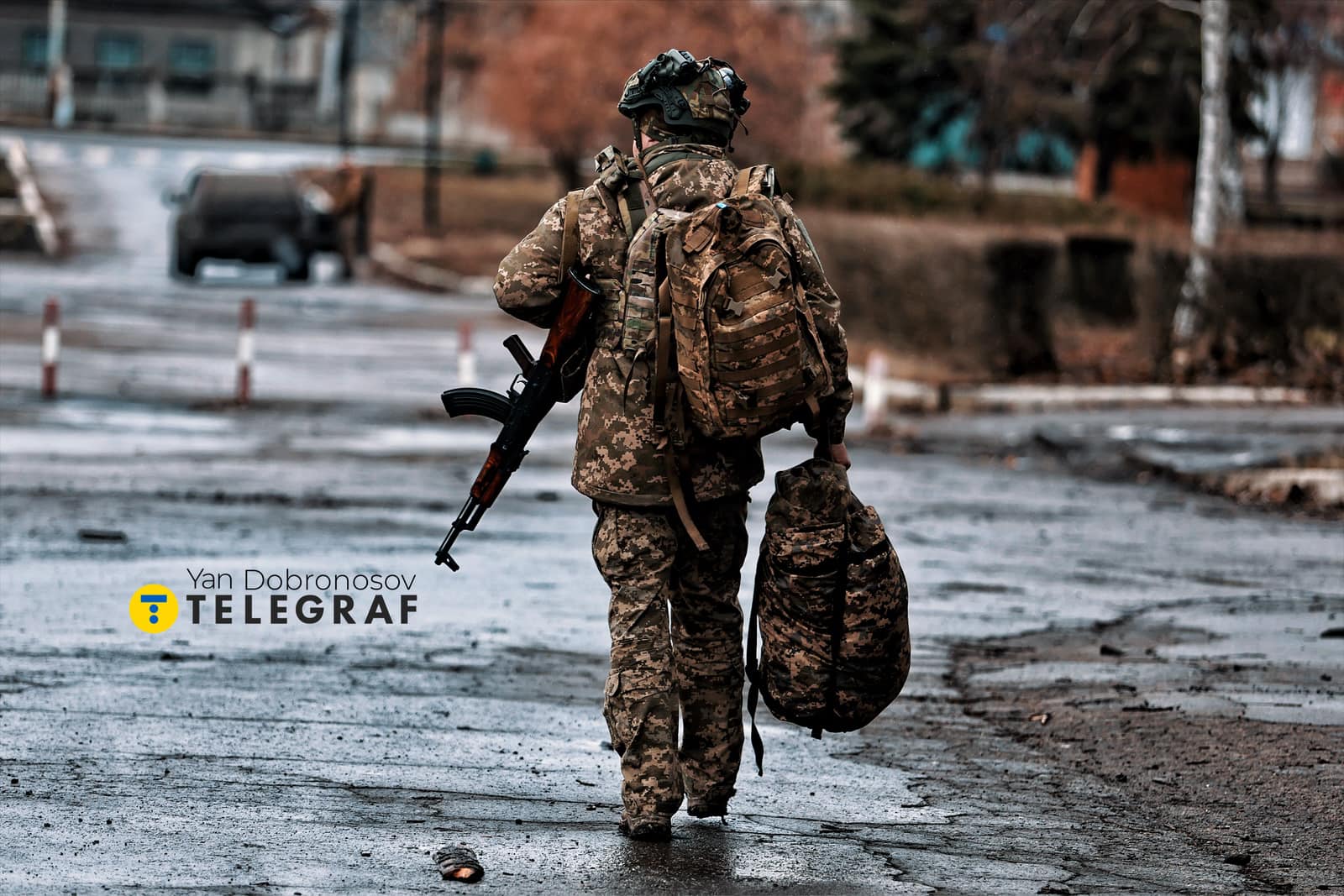
Number two. The way you form your brigades and rotate your troops has got to eliminate situations where a man goes to the front and doesn't come back until he's either injured or killed in action.
I was talking to one of our senior retired generals the other day, and he said, "Look, whether it's 40 firefights or 400 firefights, at some point every soldier breaks down because the stress level is so high." So we have to get them off the front line, we have to allow them to take showers, have hot meals, go on dates, watch videos, whatever. You have to allow them to reconnect with normal existence or they will break down.
This is a question for your military leadership, and I'm not going to impose my advice, but it's crucial how you form your brigades: it's better to put "green" recruits into combat-tested units than to form new brigades out of them.
And the third thing, which is the most important one. Everybody talks about weapons and munitions, but they're a toolkit. Weapons and munitions are secondary to a strategic plan of what you want to do.
And I have yet to find anyone who will tell me what victory in Ukraine looks like. I hear from people who are great friends of Ukraine, like Ben Hodges, that Crimea and all the eastern territories [must be returned to Ukrainian control]. I completely agree with you.
And I always say to my French or German colleagues when they speculate about territorial concessions, "You know, it's very easy to give away somebody else's land. How about we talk about Alsace-Lorraine and transfer it, right?" (a region known for the numerous conflicts between France and Germany, who fought for its control — ed.).
But at the same time, politics is the art of the possible, isn't it? You are a small state. Because of your losses and emigration, you probably have a quarter of Russia's population today.
If you continue to fight a war of attrition, you know how it will end. You'll run out of people. Simple as that. So you need a strategy for victory that uses technology, smart planning, long-range fires. The risk of hitting targets. I've always argued that refineries in Russia are not civilian targets because they produce fuel that goes into the military.
But Putin succeeded in threatening with nuclear weapons and everyone froze. Of course, this cannot be ruled out, because we are dealing with a criminal regime and a nuclear state.
But I think in my calculus, the risk of nuclear release is relatively low. After all, you drove into his territory and he didn't use nuclear weapons.
— Well, we have crossed many "red lines" that Putin has drawn over the years.
— Yes, but I think he understood where the fear was on the part of the Western leadership. So I was talking to a colleague of mine who was a great scholar on Russia. And he said, "If we told Putin that we're scared of the color yellow, he would paint his face in yellow and walk in yellow face."
The Chinese have told Putin in no uncertain terms that they do not want to see a nuclear release in Eurasia, not because they care about Ukraine, frankly, but because if that threshold is broken, it lowers the nuclear threshold in the Indo-Pacific.
The Indians are fence-sitting now. They're buying Russian energy. They don't want to take sides [in the conflict]. Could they really do that, knowing their relationship with Pakistan, if the Russians used a nuclear weapon in Europe?
And most importantly, what did Putin really want? I would argue that he wanted a sphere of influence, a deal with Germany and other major European states. His approach was very simple. He wanted to make Germany the largest distributor of Russian energy resources and a dependent country.
I think, in 2014, Germany was 35% dependent on Russian gas. By the time the second war began, it was over 50%. Putin believed that this dependence would give him freedom of action and that he would be able to make a deal that Ukraine would be incorporated into his empire alongside Belarus. And that he would also be able to exercise influence over the Central European EU countries.
Putin wants the Americans out. Once the Americans are out, he believes that the Europeans will not be able to resist him. And unfortunately, the whole energy policy, especially that of the German government with its Energiewende (the country's transition to an environmentally sustainable energy supply — ed.), the exit from nuclear energy, and the shift to Russian gas, once again brought Russia back into European politics.
On top of that, the Chinese have been very aggressive in acquiring assets and creating market dependency. The Chinese market is absolutely critical to Germany, which again creates a dependency. China may be geographically removed from Europe, but it is a power in Europe right now.
So if Putin used a nuclear weapon in Ukraine, do you think any government in Berlin, Paris or London could talk to him? That would be the end. Russia would become a pariah state. Yes, anything is possible, but horizontal escalation is a much more threatening possibility to me, because Putin is constantly testing the limits.
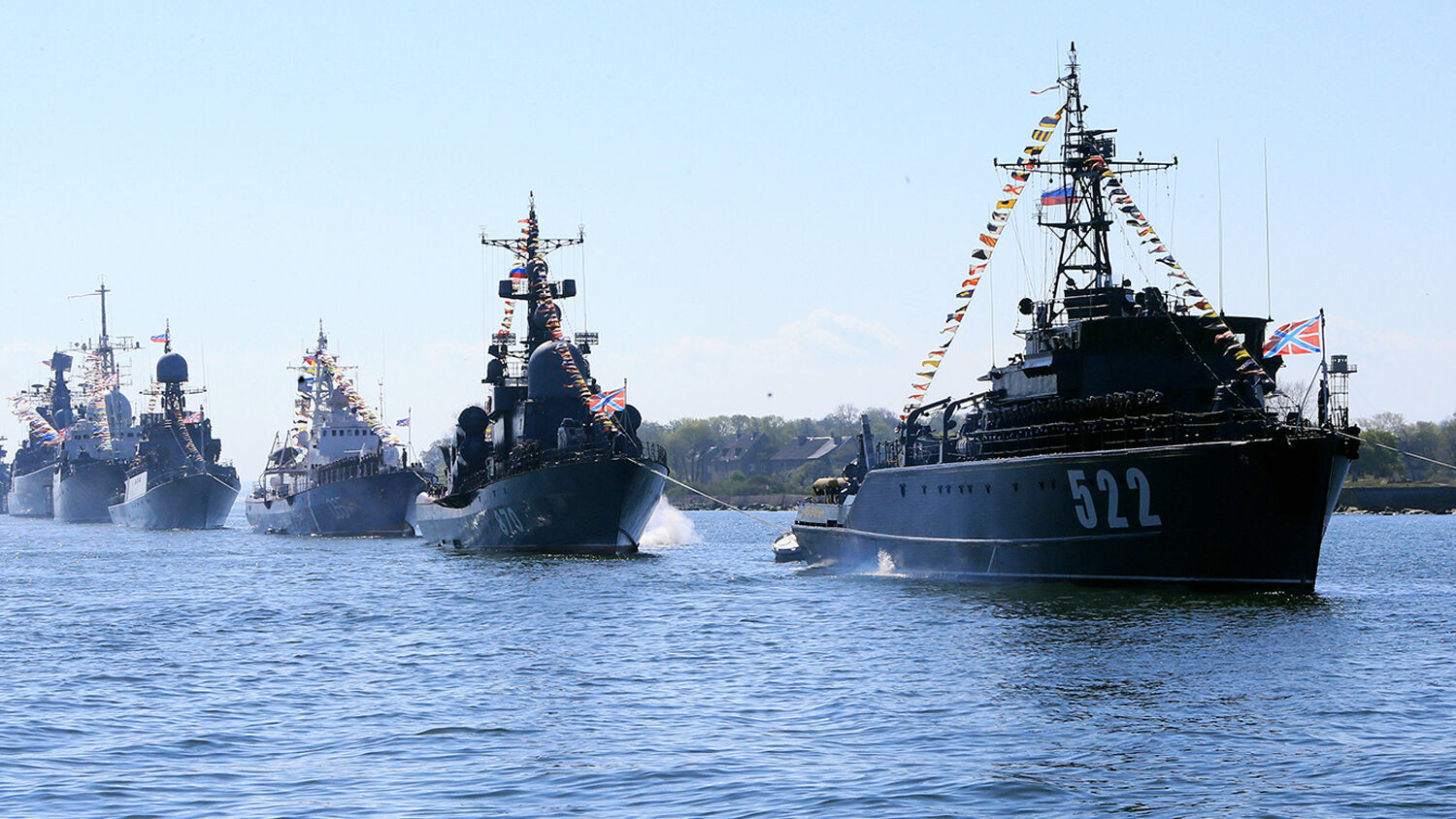
He is violating airspace of NATO allies. He's basically shutting down the Black Sea. He is constantly interfering in the cyber domain. All those shadow ships that are dragging anchors in the Baltic to rip up the cables, and God bless, the Finns finally took action, detained the Russian ship, and said, "Enough." Because that's the only thing this guy understands.
Putin is not that complicated for me. He is a thug from Leningrad who went into the KGB and cut his teeth in Eastern Germany. Analysts are trying to figure out what kind of a rational actor he is. A colleague of mine said, if you want to understand Putin, talk to a policeman in Petersburg. He'll tell you what a mafia gangster thinks like and how he behaves. It's all about power. It's all about manipulation. It's all about what you can get away with.
So I think this year could be really crucial for Ukraine and, paradoxically, much more dangerous than the previous ones, because it could go either way. I may be completely wrong, but if you stay on the current path, you will bleed out. Every nation has a breaking point.
I wish we had a strategy and a vision in 2022. You know, we talk about great power competition, strategic competition, all this staff. But I keep asking people in Washington, "What does victory look like? What do you want this world to look like in terms that favors freedom?"
You hear all the time that we're defending the rules-based international order. If I went to a farmer in Iowa and said, "Pay your taxes because we're defending the rules-based international order," he'd probably look at me like I was drunk or something. So we have to talk in specific geostrategic terms, prosperity, homeland security, ability to access global resources, and the rest of it.
And the fact that your country stood up and fought has changed history. So whatever happens after this, in my opinion, win, lose or draw, the world is not going to be the same.
We are in a situation where we have to ask ourselves, what is the world really like? And what are the rules that really govern it? And the reality is that it's a very Darwinian self-help environment. Up until 2008, we were still bringing Russian officers to the Marshall Center. After Georgia was invaded, we stopped allowing them to come. And I remember a Russian one-star general telling me that there is a Russian proverb, "If you don't feed your own army, you're going to feed somebody else's". And I thought this is so true. We forgot about it.
— You know, we've talked a lot about the U.S. and its role in the world. The need for a realistic dialogue between the States, Europe, and Ukraine. But what can we really expect from Europe? What will its role be in everything concerning Ukraine’s future, considering the current weakness of European capitals?
— When people say "what to expect from Europe," that's actually a misnomer. There's no such thing as Europe in this conflict. We have become so accustomed to it because the leaders of the European Union now talk as if they were a nation-state.
I think that misses the point. The reason why it's so difficult to actually support you directly on the scale that you deserve is because the security optics in Europe are fractured along the lines of where you are on the map.
Politically, NATO is united. It's behind you, saying, "We want to help Ukraine." But when it comes to risk-taking, if I'm in Warsaw, Helsinki, Tallinn, Vilnius, or Bucharest, the position is "Russia is the threat. We have to do everything to help the Ukrainians." That's why the Poles are sending you so much armor. That's why the small Baltic states are trying to do everything they can.
When I'm in Berlin, it’s a different conversation. Today's Germany, unlike the Germany of the Cold War era, is no longer a frontier state. So the questions there are more like, "How do we defuse this conflict? How do we get back to a situation where our economy is not suffering so much?"
When I'm in Paris, because of French interests in Africa, the Middle East, the Mediterranean, a lot of the conversations I have with political and military leaders are about the south, Europe's southern borders and the Sahel.
When I get to Lisbon, I have no idea what they're talking about other than migration, half-jokingly.
My point is that there's a fractured security optics because there's no unified sense of threat perception. Paradoxically, the reason for this is Russia's relative weakness.
During the Cold War, the Soviet Union sat in the middle of Germany and had about 50 non-Soviet Warsaw Pact divisions at its disposal. So no matter where you are in Western Europe, you are threatened in the same way, and that tends to focus your attention.
Russia is relatively a shadow of what the Soviet Union was. Different governments see it differently and have different goals and interests. For example, if you talk to the Estonians, who have a population of just over a million, they understand perfectly that if they are overrun and occupied, they will be biologically destroyed. I mean, how long would it take for the Russians to put the Estonians on trains and buses, deport them out of the country, destroy the elites by imprisoning or killing them? And then it's all over.
That's why losing a war to Russia is a matter of survival for Estonia, Latvia and Lithuania. In Paris or somewhere else like Madrid, it's a completely different conversation.
So until NATO, and the Europeans in particular, come up with a common threat perception, you're going to have this fragmentation, that's number one.
Number two, Europe is disarmed. The stockpiles are empty. And unfortunately, for the last three years, instead of investing in rearmament and rebuilding the defense industrial base, they've been talking about it.
I wrote a piece for the Wall Street Journal a couple of years ago with the title, "China, Russia and the West’s Crisis of Disbelief in Europe". Europe has lived very well. For 30 years, it has been rolling in butter, as I like to say. And good times produce managers, they don't produce leaders.
Who is the most forceful leader in this war? It's Zelenskyy, it's your guy. A comedian. Who knew? At the beginning he didn't act as if he knew what was going to happen, he probably didn't make the right decisions.
But at the critical moment, instead of getting on a plane and flying out of Kyiv, he stayed. That's leadership.
We have a situation where Germany has no government, France has no government. The Brits have a very weak government that's kind of stumbling along.
The Italians are standing up. Meloni has a strong relationship with President Trump.
Poland is an odd situation because it's now very much aligned with the EU, Berlin and Brussels. A critical country on the flank is sort of not really in the game.
— And they have elections coming up, so on top of everything, Poland is caught up in internal disputes.
— Yes, it's painful to watch. But the Finns are in. That's a big win for the Baltics. The Swedes are in. These are real militaries.
But let's summarize. It's going to be a tough year for Ukraine. But maybe there is some hope. Because I think Putin is making a mistake by refusing to negotiate and taking this kind of position. Because he's telling President Trump that he's not interested.
And what we need is a strategy to end the war that does not compromise your vital national interest. What's more important is not even when this deal happens, but what happens after the deal.
When the Germans talked about bringing you into the European Union very early on, I didn't think that was realistic, because you can't bring a country into the EU that is constantly threatened by escalation and war. Not one red cent of private capital is going to be invested in rebuilding Ukraine. The first step is to solve your security equation.
That's why I've argued from the beginning that Ukraine needs to be in NATO, not because I like you, but because it's the cheapest and most effective way to secure Europe's eastern flank. You're one of three countries that have population resources and territory that can actually create large conventional forces. That's Ukraine, Poland and Romania.
I call you the best NATO ally that's not in NATO because of what you're doing. Let's go back to 2008. Think about what the world would have looked like if the French and the Germans hadn't blocked your membership in NATO.
The minute that was done, what does Putin do? He invades Georgia.
— Yes, because he saw weakness.
— It's not just that. His assumption was, "I grab some territory, and then what? Do you still want to join NATO? That means you're voting for war with Russia."
I don't think your NATO membership is in the cards right now because of all the mistakes that have been made.
Everything will depend on whether there is actually a cease-fire. Will we have a Korean-like solution where you have military commitments, support, security guarantees? You never recognize that you lost the occupied territories. It's your land.
But if you don't have the kind of ironclad military, economic, security backing, Putin is going to attack you again. It's only a matter of time. As the Russians call it, "peredyshka," and he will go in and try to finish the job.